Full Basement Waterproofing in Baltimore, MD
Full basement waterproofing in Baltimore, MD usually means a drain inside the walls that carries water to a pump, a membrane on the outside of the foundation, or both. Through this free referral service, your request reaches a single independent contractor nearby, who follows up and explains the options in writing.
Not sure if we cover your area? Check now ↓
Basement Estimate Request
Takes about 30 seconds. One local contractor gets it and contacts you.
Your details go to one independent contractor who works around Baltimore, MD, and that contractor gets in touch with you directly. See our Referral Marketing Disclosure.
The Main Ways to Waterproof
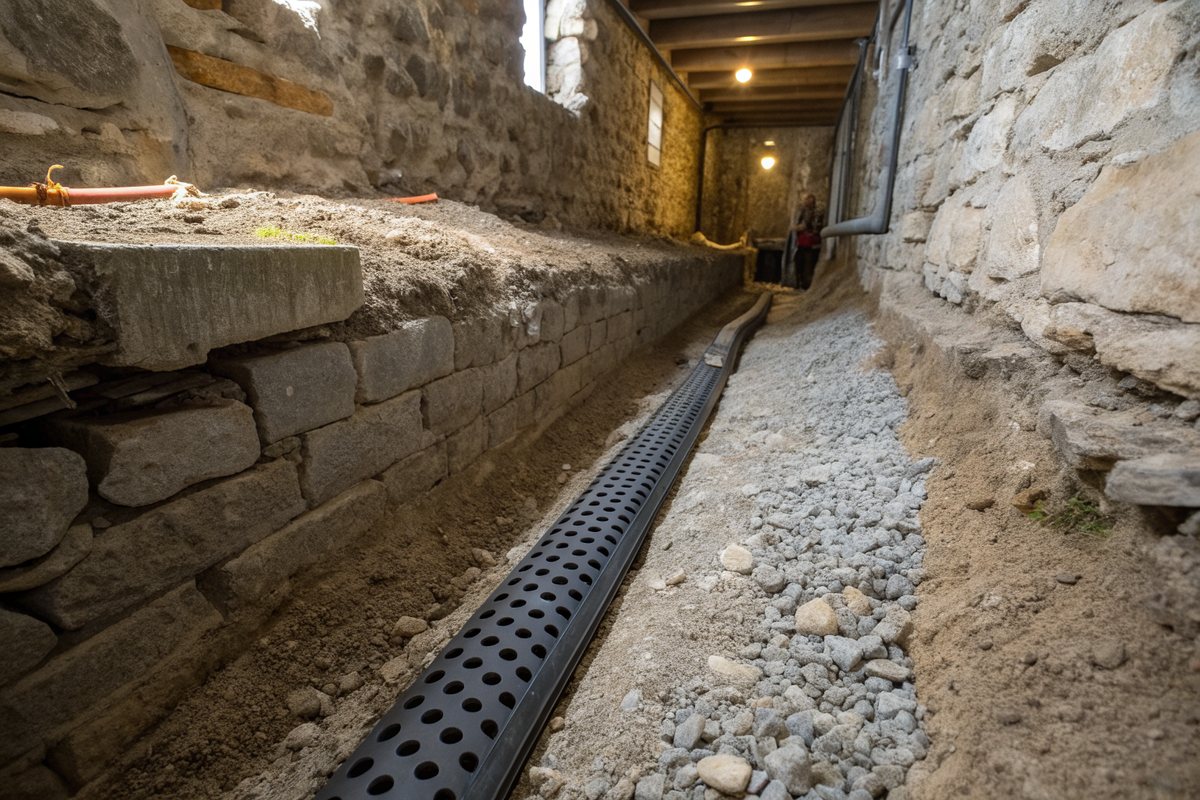
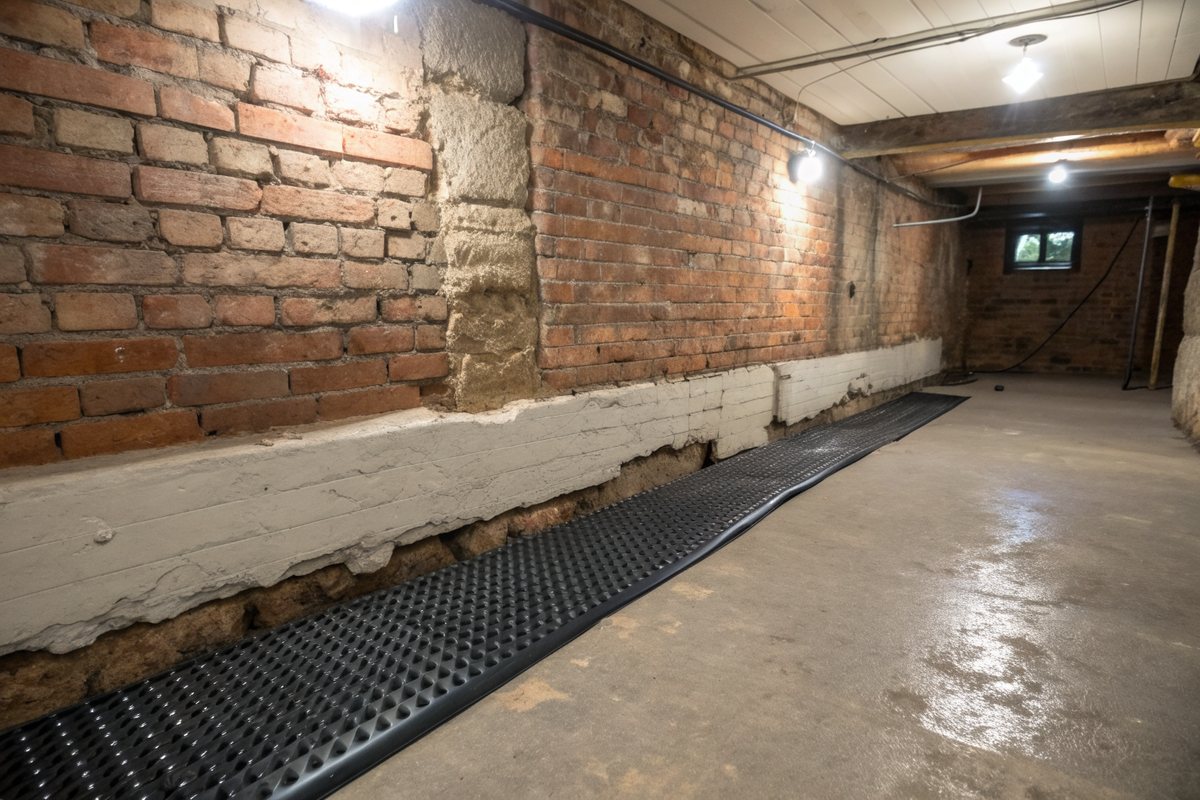
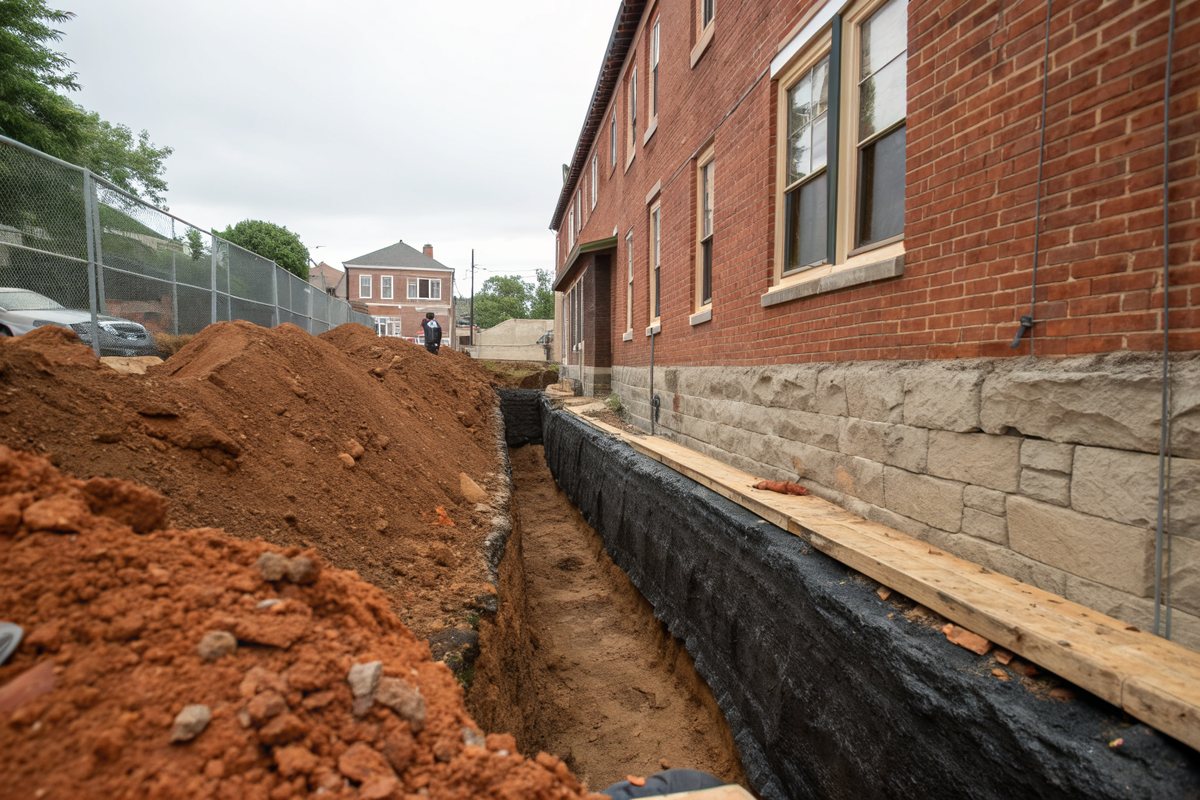
An inside system starts with a trench broken out along the floor's edge. Perforated pipe bedded in stone collects seepage and runs it to a pit, where a pump sends it outdoors. The outside route means digging to the footing and wrapping the wall in a membrane, often with a new drain at the bottom.
In the City, the outside route is often hard to reach. About half of Baltimore's occupied homes are attached single-family houses (Baltimore Magazine), and a narrow rowhouse lot shares its side walls and leaves little yard to open up, so interior drainage is often the plan.
Wall material changes the details. Census survey data puts roughly 4 in 10 City homes at 1939 or older, and brick became standard after an ordinance against wood-frame building, so older stone and brick foundation walls are common. In Baltimore County, 1950s block and brick basements with aging drain tile are the more usual starting point.
Ground matters too. The Maryland Geological Survey describes the Piedmont's hard rock giving way to the Coastal Plain's loose sediments, clay among them, at the Fall Zone. Slow-draining clay can hold water against an old wall for days after a storm.
Paint alone rarely stops water under pressure; it lifts as moisture collects behind it. If walls are only damp and the air turns heavy in a humid Maryland summer, a vapor barrier and a properly sized dehumidifier may do.
When Homeowners Ask for Basement Waterproofing
- A wet line around the floor's edge. An interior perimeter drain and sump give that water a route out.
- A rowhouse with no side yard. Working from inside is often the practical answer to shared walls.
- A detached house with room to dig. An exterior membrane keeps water off the wall's outer face.
- Damp walls and sticky summer air. A vapor barrier and dehumidifier can come first.
- Downspouts emptying at the foundation. Clean gutters, longer extensions and soil sloping away are cheap first steps.
What Moves the Price
| Cost row | Figure | Source (year) |
|---|---|---|
| Typical basement waterproofing project | about $3,000 to $10,000 (average about $5,000) | Fixr national (2026) |
| Interior perimeter drain, per linear foot | $40 to $120 | Fixr national (2026) |
| Sump pump installation | $600 to $2,500 | Fixr national (2026) |
| Epoxy crack injection, per crack | $250 to $1,000 | Fixr national (2026) |
| Waterproof paint or sealant, per sq ft | $1 to $8 | Fixr national (2026) |
These are Fixr's national figures, not prices from this site; no Maryland source is used. Drain length, the pump and the number of cracks drive an inside system's total. Digging out a wall isn't in these rows; request that price separately. The cost calculator gives a rough range by basement size.
Steps a Contractor Usually Follows
- First contact. The contractor gets in touch about the water and a visit.
- Around the house. Expect questions on timing and a look at gutters, downspouts and grading.
- The contract. Under Maryland law it must be written, readable and signed by you and the contractor, giving the contractor's name, address, contact number and MHIC number, plus a notice that contractors must be licensed by MHIC. It should list drain length, pump, discharge point, price and warranty terms.
- Money. No payment can be taken until the contract is signed, and a deposit tops out at one-third of the contract price.
- Permits. The City's list of permit-free work leaves out waterproofing, sump pumps, foundations and excavation. Check with DHCD (443-984-1809) or the County's PAI (410-887-3900); the contractor confirms which permits apply.
Why One Contact Is Enough
You explain the problem once, and one independent contractor follows up with a visit and a written price. This site does no basement work, sets no prices, signs nothing and holds no MHIC license; it passes requests along and may receive a flat advertising fee from the contractor. You never pay it or receive anything from it.
Before signing, look the contractor up on MHIC's online license lookup or at 1-888-218-5925. A current license keeps the state's Guaranty Fund open to an eligible owner, up to $30,000 (eligibility limits apply).
Straight Answers
Can a rowhouse basement be waterproofed from outside?
Sometimes, but shared side walls and small rear yards make digging hard to arrange on many rows, which is why an inside drain with a sump comes up so often. Ask the contractor to explain in writing why one approach fits your house.
Where does the sump water go?
Outdoors, onto ground that carries it away from your wall and your neighbor's. Baltimore City does not allow groundwater or subsurface drainage into its sanitary sewer. Connecting a pump to any drain or sewer line is plumbing for a Maryland-licensed plumber with a plumbing permit, so ask who handles that part.
What should the warranty say?
Ask for it on paper, naming what is covered, the length of coverage and whether a buyer of your house inherits it. A spoken promise is hard to hold anyone to.
Other Problems, Other Fixes
Water at one spot may call for basement leak repair or foundation crack repair, and the pieces of a full system are covered under sump pump installation and basement drainage.
Talk to a Waterproofing Contractor
Send the form with a few lines on which walls get wet and what weather brings the water. One independent local contractor will contact you about a visit and a price on paper, and the decision to proceed stays yours.